One concrete moment
What most first Superwin hands miss on declare
The dealer pushes 13 cards. You have one discard to make. A declare without a pure sequence is not a brave finish. It is usually the most expensive line on the table.
The sequence below is the common 13-card order. Superwin may change a timer or a penalty. Read those two numbers on the table before the first card moves.
01
The problem is a show that is not yet a show
A first Superwin hand fails most often at declare, not at the deal. The fan looks busy. The required pure sequence is missing. The player taps show because the timer is loud.
The cause is order. You need two sequences. One of them must be pure: same suit, consecutive ranks, no joker. Sets of three or four matching ranks do not replace that duty.
The impact is the invalid-declare bill. In common house text that bill is a full count, which is worse than a first drop and often worse than a middle drop.
The response is to sort for the pure run first, then decide whether the rest of the fan can finish. If it cannot, drop. Do not invent a show.
02
Deal, draw, discard, declare, show
Keep this order. Superwin may relabel a button. The legal sequence does not change because the icon is nicer.
- 01
Deal
Receive 13. Count them. A 12-card or 14-card fan is a table fault, not a strategy problem.
- 02
Sort for a pure run
Group one suit. A 3-card or longer consecutive block with no joker is the required spine.
- 03
Draw
Take the closed deck or the upcard. The upcard is public. Taking it tells the table what you need.
- 04
Discard
Throw a card that does not serve the pure run or a nearly closed set. Do not throw the neighbour of your own run if you can avoid it.
- 05
Declare only when legal
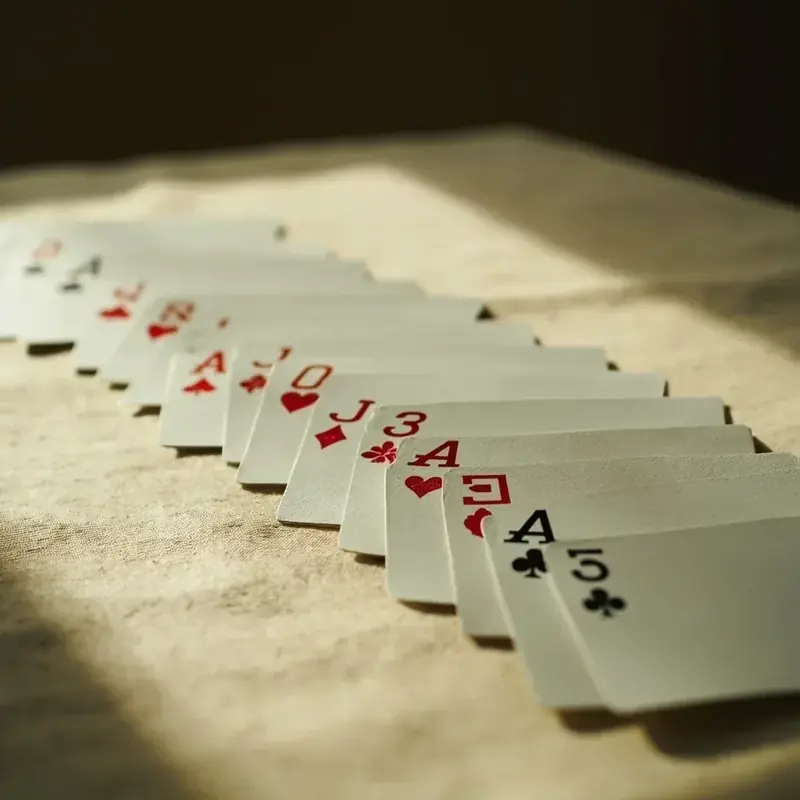
Two sequences, one pure, remaining cards in sets or a second sequence. Then show.
03
Why an invalid declare costs more than a drop
A drop is an admission that the fan will not get legal in time. The table bills a published drop. You leave with a known number.
An invalid declare is a claim that the fan is already legal. The table checks. If the pure sequence is missing, or a set is only two cards, the claim fails.
Common 13-card text then applies a full count. Face cards at 10 add up quickly. That is why the first Superwin mistake is so expensive.
If Superwin prints a cap on invalid shows, quote it before you sit. If it prints nothing, assume the painful convention and drop earlier.
04
Joker use that still leaves you illegal
A printed joker or a wild joker can finish an impure sequence or a set. It cannot, in the usual rule, sit inside the one required pure sequence.
Players hide a joker in a almost-run of mixed suits and call it pure. It is not. Suit must match. Consecutive means consecutive.
A leftover joker that is not part of a meld is deadwood. It does not reduce the bill just because it looks special.
Confirm Superwin’s printed joker sentence. If the product only shows a jester icon, you do not yet have a rule.
05
Pre-click settings that belong beside the join control
Read these five before the first deal. They are not strategy. They are the table you are about to buy.
06
Probability talk belongs only on the declare
This sequence will not tell you that you are due a win. Cards do not owe you a 4 of hearts because you already hold the 3 and the 5.
The only useful chance statement is about the show: either the fan is legal now, or it is not. There is no third state called “close enough”.
Drawing to an inside run with two ranks missing is a longer project than it feels. A drop remains available while the fan is still illegal.
If you want skill limits after one clean show, open the strategy note. That note starts where this sequence ends.
07
A clean show is a completed task, not a streak
One legal Superwin show proves you can operate the declare control. It does not prove the next hand.
Stand up after that show if the point of the sitting was to learn the buttons. Staying because the first bill was small is a new decision.
If the show failed, do not correct it by raising the stake. Correct it by re-reading the pure-sequence rule.
Login notes are the next task only if you still cannot reach a table. The sequence itself does not require a new account story.
08
What to do after the first legal hand
If the Superwin controls matched this order, move to skill limits: when to drop, how to read discards, how to cap a sitting.
If the controls did not match, write down the difference. A Superwin house variant is a fact. A feeling that the rule was unfair is not.
If you never found the drop control, stop. A table that cannot fold is not a beginner table.
PLAY NOW is for readers who already finished this sequence in the product, not for readers who only finished the sentences.
Field note 1
A 13-card count that is wrong is a table fault
Before you sort a single suit, count the cards. Twelve or fourteen means the deal is broken. Superwin may offer a re-deal control. If it does not, leave the table and write that fact down. Playing on with the wrong count turns every later declare into an argument you cannot win.
Count again after every draw and discard. A hidden extra card in the fan is how invalid shows happen even when the sequences look pretty. The timer will pressure you to skip the count. The invalid-declare bill is the cost of skipping it.
If Superwin auto-sorts the fan, still count. Auto-sort is furniture. It does not certify legality. The show button will not care that the colours lined up nicely.
This is still first-hand work, not strategy. Strategy starts after one legal show. A wrong count never becomes a clever discard.
Field note 2
The discard you throw teaches the table
A first-hand discard is a sentence. Throwing a high unsuited card is normal. Throwing the neighbour of a card you just picked is a confession. Superwin’s animation may hide the pile after a few turns. Open it. The pile is the only public text.
Do not take an upcard unless it finishes the pure run or a set you can name in one breath. Taking “because it is a face card” is how fans get busy and illegal.
If two opponents have already taken from your only live suit, the first-hand answer is often a drop, not a heroic impure patch. The how-to job is to keep the cheap exit available.
When the first legal show finally happens, stop teaching yourself on the same sitting if the point was only the buttons. The strategy note is the next classroom.
Field note 3
House labels that pretend to be the rule
Superwin may call a button “finish” or “done” instead of declare. The legal test does not change because the verb is friendlier. Two sequences, one of them pure, remaining cards in sets or a second sequence.
A highlighted suggestion is not a referee. If Superwin paints a glow around an impure run and you have no pure spine, the glow is decoration. Ignore it or pay the invalid bill.
Timers that pulse red are not extra rules. They are pressure. Sort the spine first, then decide drop versus one more draw. Pressure is how first hands become expensive.
If you cannot find drop after a minute of looking, you do not have a beginner table. Leave. Usability failures belong on the reviews desk, not in your wallet.
First-hand questions that change the declare
Ask How many cards start a Superwin hand?
The common deal is 13. Count them. A wrong count is a table fault.
Ask Can a joker sit in the required pure sequence?
Usually no. Confirm Superwin’s printed sentence before you rely on a wild card there.
Ask What is the cheapest exit from a broken first hand?
A first drop, if Superwin still offers it. An invalid show is rarely cheaper.
Ask Do I have to take the upcard?
No. Taking it tells the table what you need. The closed deck hides that signal.
Ask When is a set legal?
Three or four of a rank. Two of a rank is not a set.
Ask What next after one clean show?
Read strategy limits, or stop for the day if the sitting was only a control test.
If the checks passed, open the configured route
If you can name the pure-sequence rule and the invalid-declare cost, the configured route is optional. If you cannot, stay here.